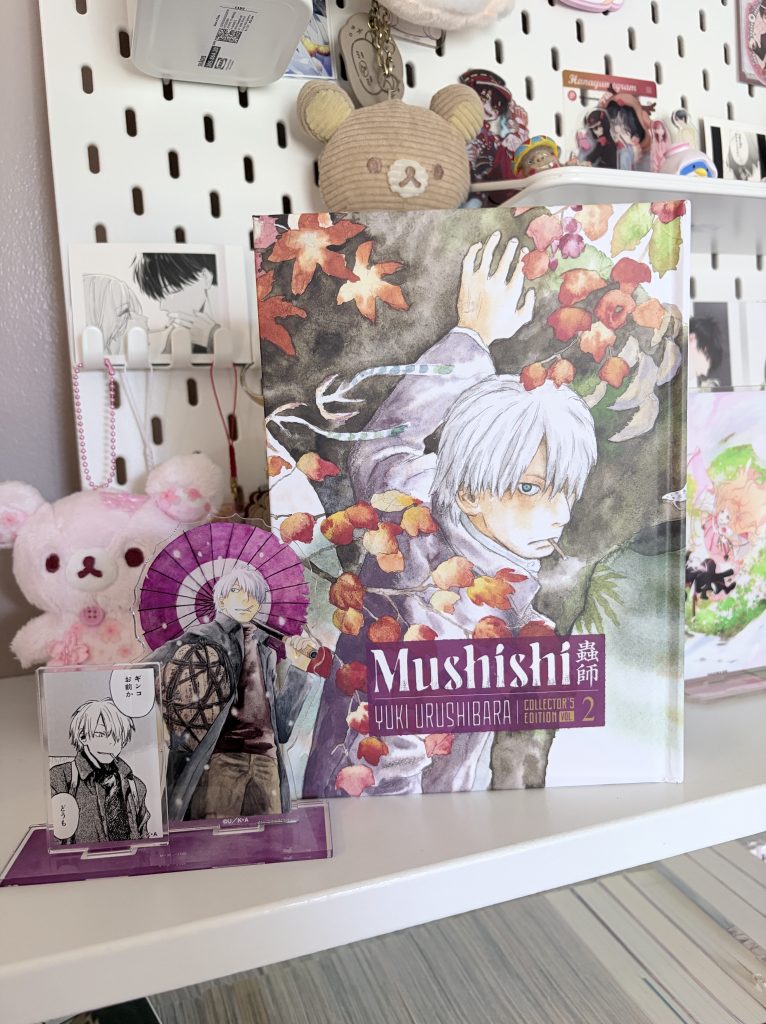
In my eyes, Mushishi is an anthology of realistic fairy tales. Never have I had such an enjoyable time following a man as he travels place to place, observing the mystical world around him.
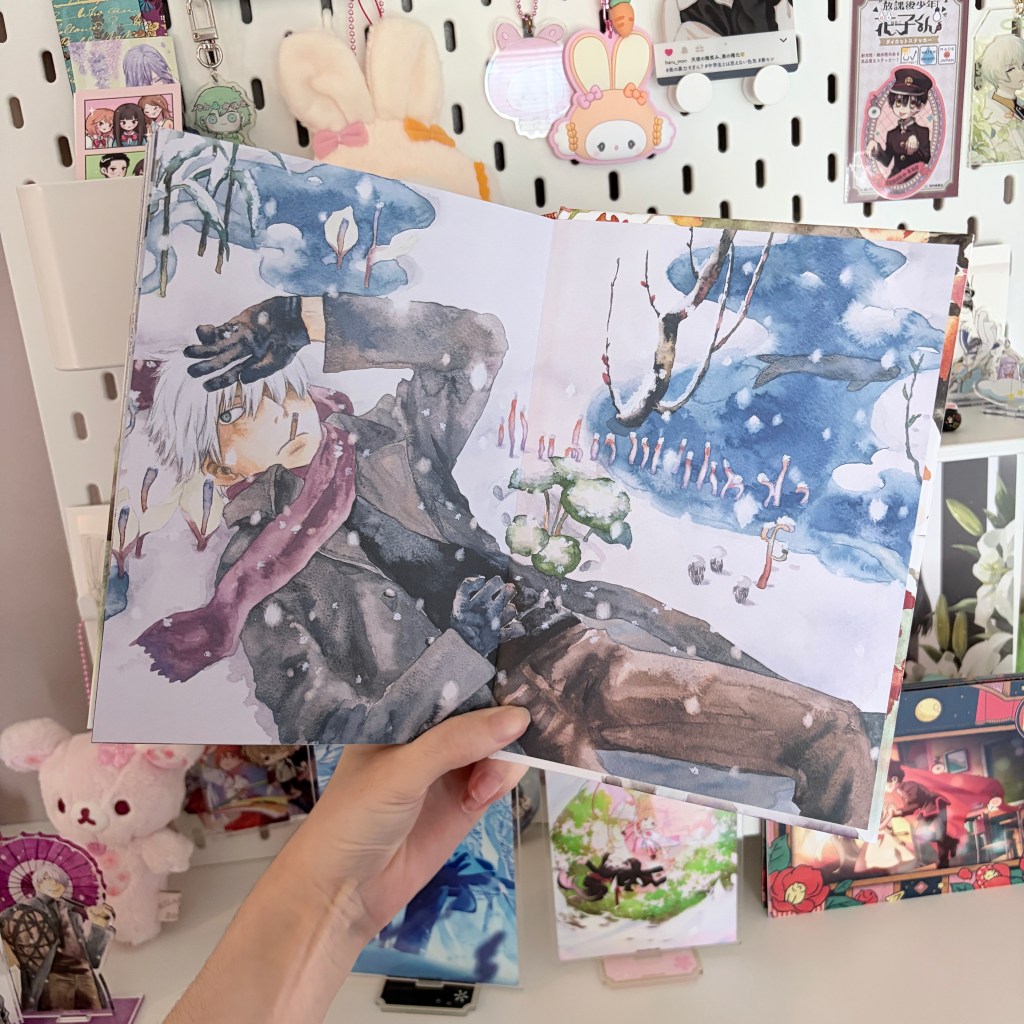
You can check out a sample of this series for yourself below!
Author
Genre & Tropes
Info about this series
Buy the volume for yourself!
*Please note that I am an Amazon affiliate! That means I may make a small commission, at no extra expense to you!*
My thoughts on this volume (Spoilers!)
Mushishi is tied with Natsume’s Book of Friends for my favourite Iyashikei series. While both are quite different in tone and story—Natsume with his dreamy friendliness towards the supernatural, and Ginko with his grounded curiosity and respect towards the supernatural—both give me a very similar feeling of peace and calmness when reading.
This volume houses two volumes of the original manga print, and 10 chapters. As this series follows a more anthology-like method of storytelling, most chapters can be enjoyed on their own. Of course, some characters make re-appearances, so I would recommend reading it in order to get the most out of it.
Let’s take a look at a few of my favourite chapters found in this volume:
The Cry of Rust
This volume opens with a story of a young girl with a beautiful voice that attracts mushi.
This chapter showed Ginko’s compassionate side, which I really enjoyed! The villagers of the town, not understanding anything besides the fact that the girl is the cause of the villages grief, act unreasonably cruelly towards her. As Ginko was able to figure out the cause of the problem and solution rather quickly, the main point of strife comes from the villagers.
Although their reactions felt incredibly realistic for an old timey village set in the mountains, it was still really upsetting to see them demand compensation from a young girl who did no wrong. Like, they looked ready to completely banish her from the village with no actual proof that she did anything anything wrong. I was so grateful to see Gingo step up and defend her without any hesitation.
Where Land Meets Sea
This story follows a man who, after losing his love at sea, waits patiently by the coast for her return.
This story shows my favourite characteristic of Ginko—his willingness to help people see through things until the end. While he could have just left the man to his own devices, he instead decided to keep him company, leading him out to the sea. In many of Ginko’s stories, there isn’t anything he can do besides explain the situation and the mushi that caused it—much like this one. You can’t exactly win against nature, after all.
The One-Eyed Fish
Beside a pond of one-eyed white fish, a one-eyed white-haired woman takes care of a familiar-looking boy named Yoki.
This was by far my favourite story in the volume. That should come as no surprise if you have already read it, as it’s our first real glimpse at Ginko’s past! Unsurprisingly it’s on the more tragic side, but is still filled with love and comfort, as most Mushishi stories are. Even after reading it, just thinking about how his name came to be Ginko starts to get me emotional…
I love how even before everything happened, he was a naturally kind and curious person. I wonder if, even he hadn’t experienced that event, would he have chosen to become a mushishi? I like to think it’s his destiny to help those afflicted.
Those Who Pick Empty Cocoons
If you find yourself in a closed room with an uro, never open it. It will pull you into a false hollow, and you will never find a way out.
How terrifying. While quite a few of the stories in Mushishi come with rather scary implications if you take a moment to think about them deeply, this chapter paints a vivid picture of all the horrors that nature can bring. When the old man talked about keeping rooms open, I never made the connection that what he really meant was to not be in any closed space of any kind, walled or not. Watching what happened to that girl felt like it came straight out of a horror story.

 Maddies Manga
Leave a comment