As with all genres, romance manga tend to share a lot of the same vocabulary. In order to be able to read comfortably, readers need to have an understanding of the more commonly used words and phrases in these manga. In today’s post, I am going to introduce three phrases that you will come across quite often when reading romance manga.
All three of today’s phrases were taken from Volume One, Chapter One of A Condition Called Love / 花野井くんと恋の病. If you want to check it out for yourself, click on the link below!
運命の人・うんめいのひと・unmei no hito
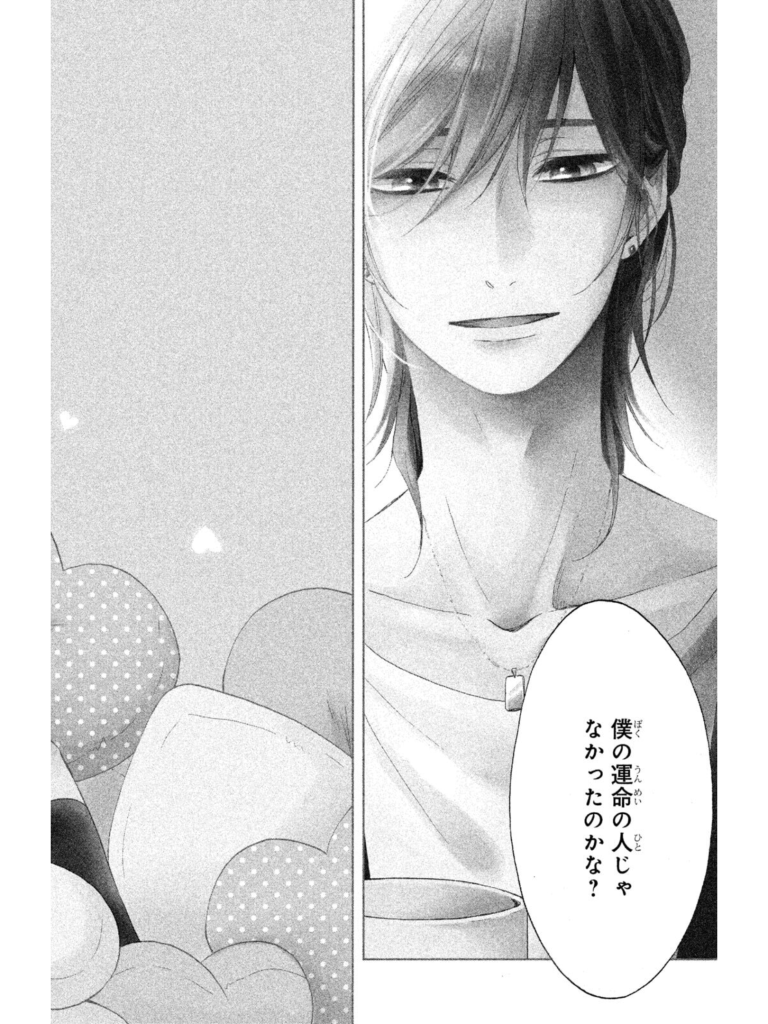
運命の人 is a phrase that can translated into English as “soulmate。” Let’s first break down the phrase to get a better understanding.
運命・うんめい・unmei — is a compound word that means destiny, fate.
の — is a particle. It shows possession of something.
人・ひと・hito — means person.
So, putting all three together we have “person of destiny”, or, “soulmate。”
In the above picture the character says “僕の運命の人じゃなかったのかな?” we can translate this as “I wonder if you weren’t my soulmate.”
We can often see the phrase 運命の人 used after a pronoun.
My soulmate
- 私の運命の人 ・わたし の うんめい の ひと・watashi no unmei no hito
- 僕の運命の人・ぼく の うんめい の ひと・boku no unmei no hito
- あたしの運命の人・あたし の うんめい の ひと・atashi no unmei no hito
Your soulmate
- あなたの運命の人 ・あなた の うんめい の ひと・anata no unmei no hito
- 君の運命の人・きみ の うんめい の ひと・kimi no unmei no hito
彼氏ができた・かれしができた・kareshi ga dekita
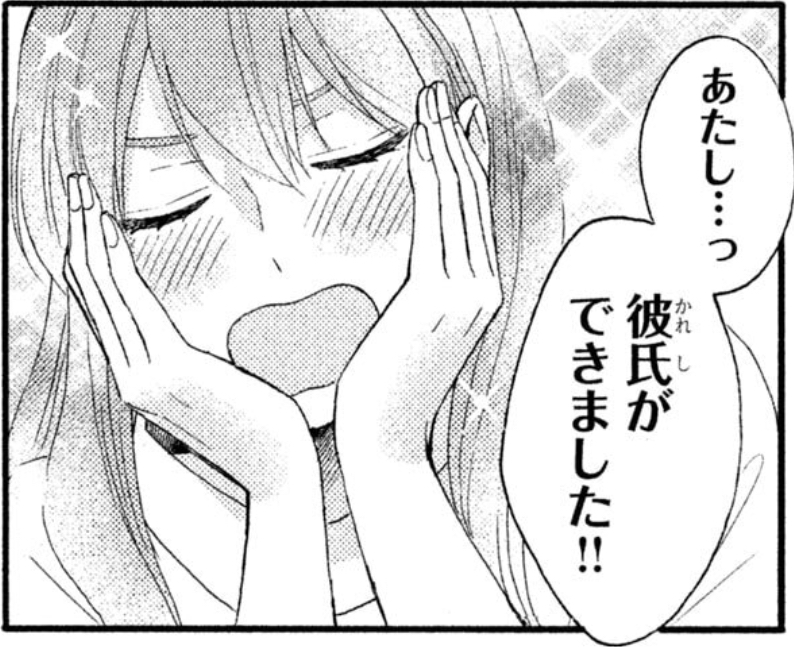
彼氏ができた is a phrase that can be translated as “I got a boyfriend”. This one can be a little tricky to understand at first because of the usage of the できる verb. Let’s take a look at all of the different parts of this phrase.
彼氏・かれし・kareshi — is a compound word that means boyfriend
が — is a particle. It marks the subject of a sentence or phrase.
できる・dekiru — is a verb. It means to be able to do, but can also mean to make—depending on the context.
Putting all three together, we have “I made a boyfriend”, or “I got a boyfriend.”
In the above picture, the character says “あたし。。。彼氏ができました!!” Which can be translated as “I… got a boyfriend!”
Not just limited to boyfriends, we can also use this sentence structure to say someone got a girlfriend.
I got a boyfriend / girlfriend
- 私は彼氏ができた・わたし は かれし が できた・watashi wa kareshi ga dekita
- 私は彼女ができた・わたし は かのじょ が できた・watashi wa kanojo ga dekita
Did you get a boyfriend / girlfriend?
- あなたは彼氏ができましたか・あなた は かれし が できました か・anata wa kareshi ga dekimashita ka
- あなたは彼女ができましたか・あなた は かのじょ が できました か・anata wa kanojo ga dekimashita ka
付き合ってください・つきあってください・tsukiatte kudasai
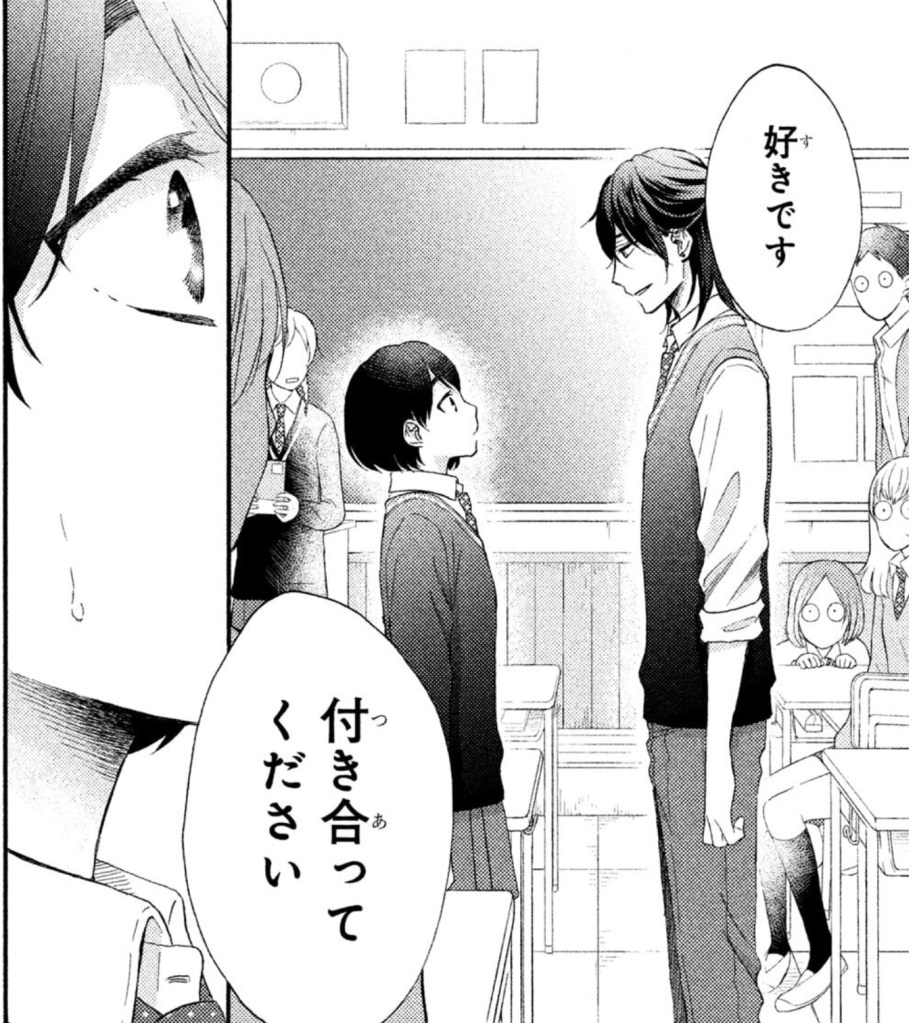
付き合ってください is a phrase that can be translated at “please go out with me.” Let’s take a look at the breakdown of this phrase.
付き合う・つきあう・tsukiau — is a verb. It means to accompany, to date.
ください・kudasai — means “please”. It can be attached to the end of verbs in the て form to turn them into polite requests.
Putting them together, we have “please date me”, or “please go out with me.”
In the above picture the character says “好きです。付き合ってください.” Which can be translated as “I like you. Please go out with me.”
The 付き合う verb can be used in differing levels of politeness.
Order / command (very impolite)
- 私と付き合いなさい・わたし と つきあいなさい・watashi to tsukiainasai
Won’t you do the favour of dating me?
- 私と付き合ってくれない?・わたし と つきあって くれない?・watashi to tsukiatte kurenai?
- 私と付き合ってくれませんか・わたし と つきあって くれませんか・watashi to tsukiatte kuremasen ka

 Maddies Manga
Leave a comment